2026. Plato. How to Speak Freely: An Ancient Guide to Free Speech and Dissent. Princeton University Press.
“I love and respect you, men of Athens, but I will obey the god rather than you. And as long as I draw breath, I will not stop.”
Order the Book: Princeton | Amazon | B&N | Google
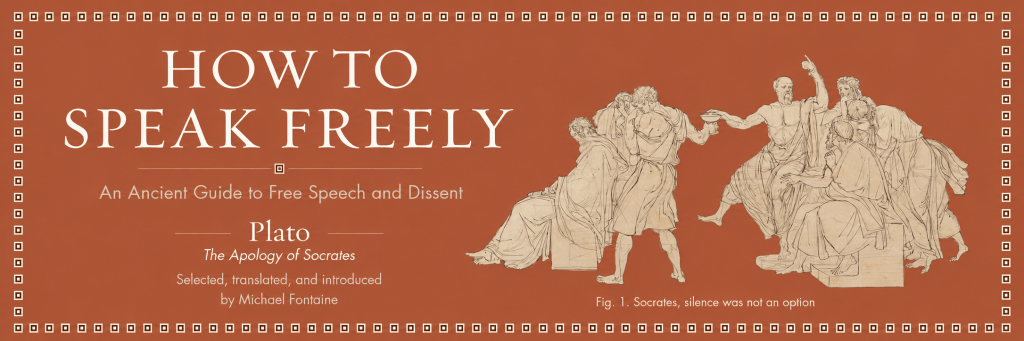
Free speech is back at the center of political and cultural debate, amid intense arguments over censorship on campus, in government, and in everyday life. How to Speak Freely offers a timeless and essential exploration of free speech through a lively new translation of Plato’s Apology, perhaps the most famous and important work on the subject in all of Western history. In it, Plato recounts the trial of Socrates in 399 BCE—one of the most powerful defenses of freedom of thought and speech ever written.
In Plato’s Apology, Socrates embodies the archetype of a person who thinks independently: a figure of conviction who pursued curiosity honestly, became convinced of unpopular truths, spoke candidly about them, and refused to grovel, pander, or recant—even to save his life. By insisting on his freedom and accepting the consequences, Socrates became the most famous martyr to free inquiry in history—and raised enduring questions about the value, dangers, and limits of free speech in a democracy.
How to Speak Freely supplements Plato’s Apology with a delightful fable on free speech told from a different angle. In the short dialogue The Gods in Council, Lucian (c. 125–180 CE) satirizes the concept of “platforming,” showing how free speech ideals are truly tested only when they’re truly applied.
Featuring an enlightening introduction and the original Greek on facing pages, How to Speak Freely is a powerful and thought-provoking examination of the rewards and risks of speaking one’s mind.
The Artwork Behind the Cover
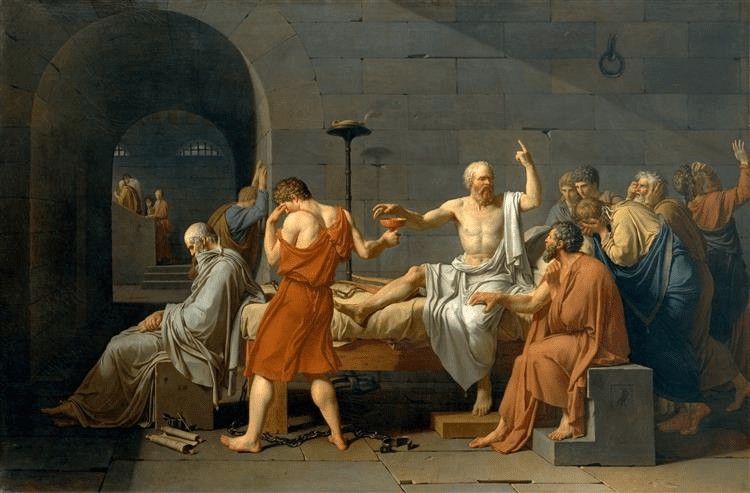
The cover of How to Speak Freely features a preliminary drawing for Jacques-Louis David’s celebrated painting The Death of Socrates (1787). The finished painting, now in the Metropolitan Museum of Art, depicts Socrates calmly reaching for the cup of hemlock while continuing to teach his followers moments before his death.
David chose not to portray a defeated man. Surrounded by grieving friends, Socrates remains composed, pointing upward as he defends the principles for which he is willing to die. The painting has become one of the most enduring visual representations of intellectual courage, free inquiry, and fidelity to conscience.
More than two thousand years after the trial, Socrates remains a touchstone for debates about free speech, dissent, and the responsibilities of citizenship. This book returns to the original texts behind that story and asks what they can teach us today.
For more about the history of David’s famous painting, see here
 Michael Fontaine
You must be logged in to post a comment.